Relokato / Destinations / Costa Rica

🇨🇷 Costa Rica

Rentista, Pensionado and Digital Nomad residence routes, DIMEX card, mandatory CAJA enrollment — with deadlines and the official source for each step.
Last verified: 6 September 2026
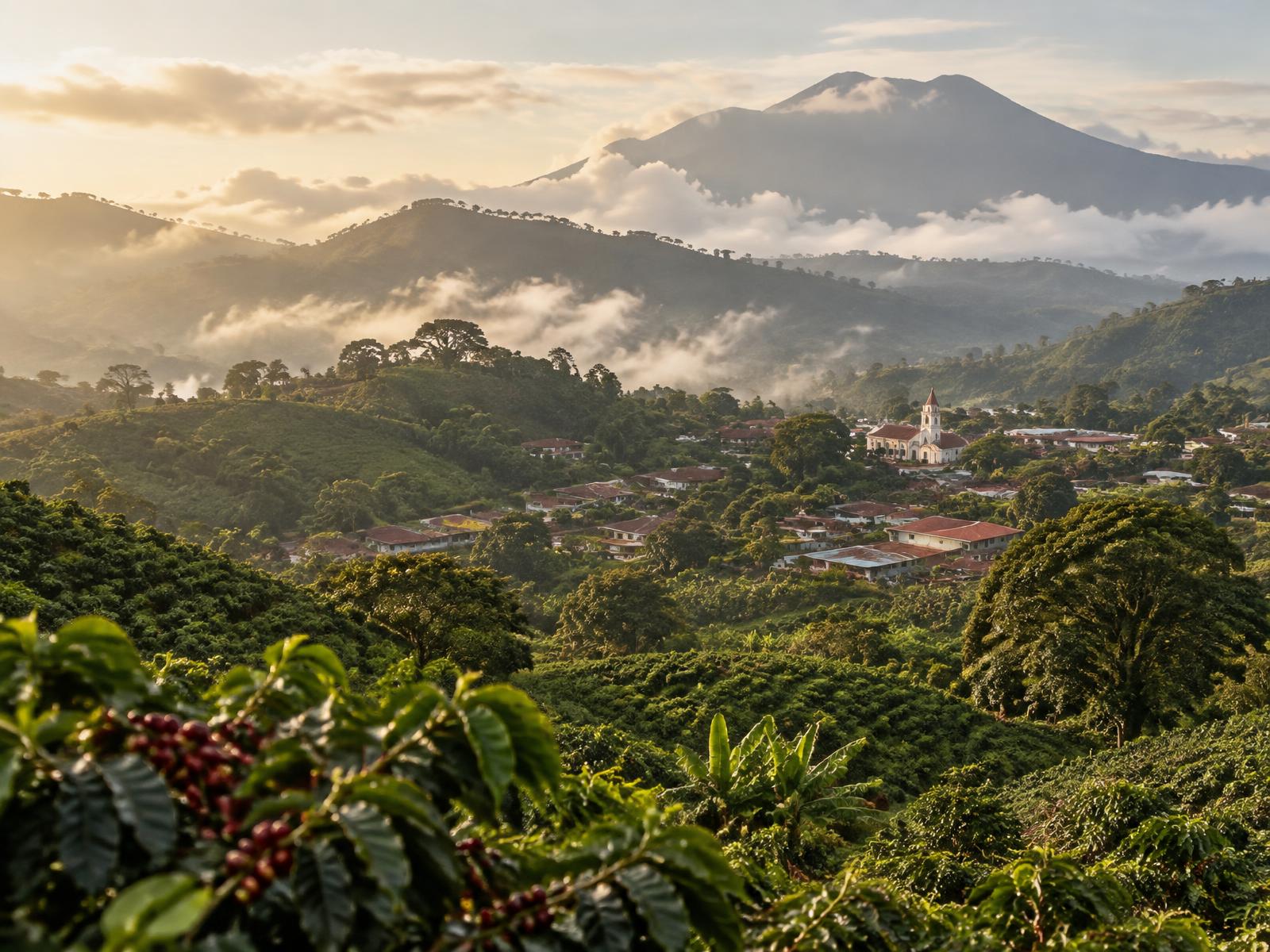
Green Costa Rican coffee hills and a small town below misty mountains
Central Valley, Costa Rica

Relokato is not a law firm and does not provide legal services or legal representation. Use of this platform does not create an attorney-client relationship. The information provided is not a substitute for the advice of a licensed attorney. This platform is not a substitute for the advice of an attorney, in the terms of Texas Government Code §81.101(c).

16
Tasks in your Costa Rica playbook
3 yr
Temporary to permanent residency path
$1,000
Minimum monthly pension (Pensionado)
$0
To start your plan
One-time cost to move
$5,000–$11,000

Relokato planning estimate for a one-time move to Costa Rica, as of September 2026. Single person moving from the US. One-time relocation costs only — government fees, apostilles, flights, shipping, rental deposits, and any professional help you choose to use. This estimate includes any professional fees you choose to incur; it does not imply representation is required. An estimate, not a quote.

DGME filing and DIMEX fees, apostilles and official translations, immigration lawyer fees, flights, shipping (import duty makes shipping less attractive), and the first-lease deposit.

Living costs are separate and depend on your lifestyle — see our cost calculator for a full breakdown.

Estimate your own move →
Pick your route

Residence routes published
by Costa Rica's DGME.

Rentista
Rentista (monthly rent)
Monthly rent that is permanent and stable, of at least $2,500 a month, from abroad or generated by banks of the Sistema Bancario Nacional, certified for at least 2 years. A $60,000 deposit paid back to you in monthly instalments is not renta and does not qualify. After 3 consecutive renewed years you may apply for permanent residence.
Income: $2,500/mo
Work: Requires DGME authorisation
Healthcare: CCSS enrolment
Ley 8764 arts. 80, 82; Decreto Ejecutivo 43926-G-H arts. 4 and 99
Pensionado
Pensionado (Retiree)
Monthly pensions that are permanent and stable and come from abroad, of not less than $1,000 a month. The statute does not use the word “lifetime”. Import-tax exemption is not automatic: it flows from Ley 9996 art. 5, whose election window closed in July 2026.
Income: $1,000/mo pension
Work: Requires DGME authorisation
Tax: Election window closed
Ley 8764 arts. 80, 81; Ley 9996 arts. 5 and 12
Inversionista
Inversionista (investment)
$150,000 of qualifying investment — registered movable or immovable property, shares, securities, productive projects, national-interest projects, venture-capital funds or sustainable-tourism infrastructure. Two-year renewable temporary residence; the investment must be maintained and its continuity shown before renewal.
Investment: $150,000
Work: Requires DGME authorisation
Term: 2 years, renewable
The route is open. The Ley 9996 art. 5 tax and customs incentives are separate: art. 12 closed the window to newly elect them five years after entry into force (La Gaceta 135, 14 July 2021), so it ended in July 2026. The sunset does not affect the immigration threshold.
Decreto Ejecutivo 43926 art. 4; Ley 9996 art. 12
Digital Nomad Visa
Digital Nomad Visa (Ley 10008)
$3,000/month from remote work ($4,000 with dependants). Granted for up to one year and extendable once; Ley 10208 interpreted art. 15 to mean “hasta por un año”, and it does not authorise a change of migratory category. The holder is a non-resident in the estancia category and does not accrue the three-year temporary-residence period.
Income: $3,000/mo
Work: Remote only
Residency: Does not accrue
Duty-free import covers necessary work equipment only — personal computer, mobile phone, tablet, camera, recording equipment (Decreto 43619 art. 14). It is not a household-goods exemption.
Ley 10008; Ley 10208; Decreto 43619 art. 14
Mandatory enrollment · CAJA (CCSS)

CAJA enrollment is the gate between
approval and your DIMEX card.

Ley 8764 art. 99 requires continuous CCSS insurance for renewal of your residence, so enrolment sits on the critical path rather than at the end of it. Contributions are not a percentage of income you declare: under art. 24 of the Reglamento de Aseguramiento Voluntario y Aseguramiento de Migrantes, the Caja sets the assessment base, which cannot fall below the minimum contributory base set by its Junta Directiva, nor below the income figure that the Ley de Migración y Extranjería establishes for your migration category — $1,000 for Pensionado, $2,500 for Rentista — and the Caja may assess higher. Relokato publishes no amount or percentage, because no current public migrant contribution scale could be located; ask the CCSS for the current figure. Relokato sequences enrolment at the right moment and tracks your payment status so the DIMEX appointment doesn't stall.

Standing condition — continuous CCSS enrolment (Ley 8764 art. 99)Required for renewal (art. 99)Caja sets the assessment baseNot a percentage you declareAsk the CCSS for the scale
CCSS (the Caja) for residents who contribute — but not on the digital nomad route
The CCSS is the contributory public system. Holders of the digital nomad stay (Ley 10008) cannot enrol in it and rely entirely on private cover for the whole authorised stay; residency categories such as Rentista and Pensionado do enrol and contribute.
This is the practical difference between the nomad route and a residency route in Costa Rica: one gives you access to the Caja, the other does not.
Digital nomad — private medical cover
The digital nomad category requires medical cover of at least USD 50,000 for the full authorised stay, either from an insurer regulated in Costa Rica or an international insurer with equivalent coverage. Travel insurance is not accepted.
Reported as the requirement that fails more applications than proof of income.
The 2022 census is an estimation
Costa Rica's XI Censo Nacional de Población y VII de Vivienda 2022 achieved only partial coverage. INEC extended fieldwork from June to 30 September 2022, and ultimately published the results as an Estimación de Población y Vivienda 2022 rather than as a census, using three separate estimation methodologies including administrative registers and a statistical model.
This matters for anything sourced to the 2022 census: it is an estimation, and INEC says so itself. Where an annual survey figure exists, prefer ENAHO.
Population — Costa Rica
5,044,197 inhabitants — national estimate
INEC's finalised national total from the 2022 estimation, published 19 July 2023. See the census caveat above: 2022 was published as an estimation, not a census.
Population — San José province
1,601,167 inhabitants — province of San José
The province, not the city and not a metropolitan area.
Population — San José central canton
352,381 inhabitants — central canton of San José
The central canton is the closest official equivalent to a municipal figure. INEC publishes no current authoritative total for the San José metropolitan area or GAM, so neither figure here should be read as one.
Where you'll land

The four areas
most movers choose.

Escazú
Infrastructure & families
Costa Rica's most established expat area. Highest concentration of international schools, 15 minutes to CIMA hospital, best shopping infrastructure. Also the most expensive.
Santa Ana
Value Central Valley
Same hospital and school access as Escazú at 15–20% lower cost. More original Costa Rican town-centre character. Growing rapidly.
Atenas
Climate & retirees
Widely cited for one of the mildest year-round climates in the country. Large English-speaking retiree community. ~40 minutes to the nearest full hospital.
Tamarindo
Beach & digital nomads
Pacific beach town with coworking spaces and fiber internet. 1 hour to Liberia airport with direct US flights. Prices spike 30–50% above Central Valley.
San José — metro
No metro — commuter rail and buses
INCOFER operates the Tren Urbano commuter service across the Greater Metropolitan Area. There is no metro.
INCOFER · August 2026
Escazú — metro
No metro
INCOFER · August 2026
Escazú — nearest airport
Juan Santamaría (SJO)
Tamarindo — metro or rail
No metro or rail
INCOFER's network does not extend to Guanacaste. Intercity buses and private transport only.
INCOFER · August 2026
Tamarindo — nearest airport
Daniel Oduber Quirós (LIR), Liberia
Liberia is the practical gateway for Guanacaste; SJO is several hours away by road.
Tamarindo — sub-district tier
No official figure is published
Tamarindo is itself Distrito 09 of Cantón Santa Cruz, not a municipality, and has no official sub-district tier. The local settlement names in circulation — Tamarindo Centro, Langosta, Villarreal — are poblados, not administrative units, so no body publishes statistics for them.
Common questions

Things people ask
before they commit.

Rentista vs Pensionado vs Inversionista vs Digital Nomad — how do they differ?
Rentista (Ley 8764 art. 82) asks for monthly rent that is permanent and stable, of at least $2,500 a month, from abroad or generated by banks of the Sistema Bancario Nacional, certified for at least 2 years. Pensionado (art. 81) asks for monthly pensions that are permanent and stable and come from abroad, of not less than $1,000 a month. Inversionista (Decreto Ejecutivo 43926 art. 4) asks for $150,000 of qualifying investment. The Digital Nomad stay asks for $3,000 a month from remote work; the holder is a non-resident in the estancia category and does not accrue the three-year temporary-residence period.
Does a $60,000 bank deposit work for Rentista?
No. Decreto Ejecutivo 43926-G-H, amending the Reglamento de Extranjería, states expressly that a deposit made with a bank so that it is returned to you in monthly fractions is not renta — what you receive back is your own money. A $60,000 deposit drawn down at $2,500 a month therefore does not meet the test. The regulation sets no closed list of what does count, so dividends, interest and rental income are examples, not the whole set.
How long does the process actually take?
DGME publishes no processing time for these categories, so Relokato publishes none either. Any duration you see quoted, including in community posts, is an estimate rather than an official figure.
Do I have to enrol in the CCSS?
Ley 8764 art. 99 requires continuous CCSS insurance for renewal of your residence. Contributions are not a percentage of income you declare: under art. 24 of the Reglamento de Aseguramiento Voluntario y Aseguramiento de Migrantes, the Caja sets the assessment base, which cannot fall below the minimum contributory base set by its Junta Directiva, nor below the income figure that the Ley de Migración y Extranjería establishes for your migration category — $1,000 for Pensionado, $2,500 for Rentista — and the Caja may assess higher. Ask the CCSS for the current scale.
Is my foreign income taxed in Costa Rica?
Not as simply as “territorial” suggests. The Income Tax Law reaches income from “toda clase de trabajo remunerado… desarrolladas o gestionadas dentro del territorio de la República”, so work you physically perform in Costa Rica can be Costa Rican-source even when the payer is foreign, the payment comes from abroad and it lands in a foreign account. Ley 10008 is a specific exemption for qualifying digital nomads and does not generalise. Your home country’s rules still apply on top.
Can I bring my family?
Spouse, children under 25, and older children with a disability can be included. On the Digital Nomad stay the income level for dependants is $4,000 a month.
Is Relokato a lawyer or an immigration agency?
No. Relokato is a planning tool. It organises the published requirements, deadlines and official links so you can work through them in order. It does not give legal, tax or immigration advice, does not file anything on your behalf, and never receives your documents. Official sources change — verify anything here against the source before you act on it.
Ready for
Costa Rica?
Free to start · No credit card · 10 minutes to your full plan